About This Information
This comprehensive article contains official information obtained through a Right to Information (RTI) request filed under the RTI Act, 2005, to Civil Hospital Ahmedabad. The information provides crucial transparency about blood bank operations, facilities, and policies at one of Gujarat's largest government hospitals, serving as an essential resource for blood donors, patients, and the general public.
Understanding the Right to Information Initiative
The Right to Information Act, 2005 stands as a cornerstone of democratic transparency in India, empowering citizens to request and receive information from public authorities. This particular RTI application was meticulously filed to Civil Hospital Ahmedabad with the objective of obtaining comprehensive details about their blood bank facilities and operational procedures. The significance of this information cannot be overstated, as it directly impacts the lives of countless blood donors who generously contribute to saving lives, as well as patients and their families who depend on the availability and quality of blood products during medical emergencies and treatments.
Civil Hospital Ahmedabad, being one of the premier government healthcare institutions in Gujarat, serves a vast population base spanning Ahmedabad city and surrounding districts. The blood bank at this facility plays an absolutely critical role in the healthcare ecosystem, providing life-saving blood and blood components for a wide range of medical situations including emergency trauma cases, complex surgical procedures, cancer treatments, and patients with chronic conditions requiring regular transfusions. Understanding the infrastructure, policies, and operational capabilities of this blood bank helps create informed awareness among all stakeholders in the blood donation and transfusion chain.
Civil Hospital Ahmedabad Blood Bank: A Comprehensive Overview
Civil Hospital Ahmedabad stands as a testament to public healthcare commitment, operating as one of the largest and most comprehensive government hospitals in the state of Gujarat. The institution serves thousands of patients daily, ranging from routine medical consultations to critical emergency interventions. At the heart of this healthcare delivery system lies the blood bank, a sophisticated facility that operates with precision and dedication to ensure the continuous availability of safe blood products.
The blood bank at Civil Hospital Ahmedabad is not merely a storage facility; it is a comprehensive blood management center that encompasses multiple critical functions. These include the collection of blood from voluntary and replacement donors, rigorous testing and screening of all donated blood units to ensure safety, proper storage and preservation of blood and its components under controlled conditions, and efficient distribution to various departments within the hospital and occasionally to other healthcare facilities in times of emergency. The facility operates under strict regulatory guidelines and quality standards to maintain the highest levels of safety and efficacy in blood transfusion services.
Blood Bank Infrastructure and Storage Facilities
Comprehensive Storage Capacity
One of the most critical aspects of any blood bank is its storage capacity, which directly determines its ability to maintain adequate reserves for both routine requirements and emergency situations. Civil Hospital Ahmedabad's blood bank boasts an impressive total storage capacity of 2,264 units, a substantial reserve that positions the facility to handle the blood requirements of a large patient population effectively. This capacity is strategically distributed across different types of refrigeration equipment, each designed for specific blood components and storage requirements.
The storage infrastructure comprises two main categories of equipment. The deep freezers, which form the backbone of long-term storage, provide capacity for 1,936 units. These specialized freezers maintain temperatures ranging from -20°C to -30°C, which is essential for preserving plasma and other frozen blood products while maintaining their therapeutic properties over extended periods. Complementing this are the Blood Bank Refrigerators (BFR), which add another 328 units of storage capacity. These refrigerators are specifically engineered for storing whole blood and packed red blood cells at temperatures between 2°C and 6°C, ensuring optimal preservation of cellular components and extending the shelf life of these critical blood products.
Advanced Refrigeration Technology
The blood bank utilizes state-of-the-art refrigeration technology specifically designed for medical-grade blood storage. The deep freezers employed in the facility are not ordinary commercial freezers but specialized medical equipment that maintains consistent ultra-low temperatures essential for long-term preservation of plasma and cryoprecipitate. These units are equipped with advanced temperature monitoring systems, backup power supplies, and alarm mechanisms that alert staff immediately if temperature fluctuations occur, ensuring the integrity of stored blood products at all times.
Similarly, the Blood Bank Refrigerators represent a significant investment in quality infrastructure. These units are purpose-built for blood storage, featuring precise temperature control mechanisms, uniform cooling throughout the storage chamber, and specialized racking systems that allow for efficient organization and retrieval of blood units. The refrigerators also incorporate features such as automatic defrosting, which prevents ice buildup without compromising storage temperatures, and digital temperature displays that allow for continuous monitoring of storage conditions.
Blood Collection Infrastructure
Beyond storage, the blood bank is equipped with four dedicated blood collection units, a configuration that enables simultaneous collection from multiple donors. This parallel processing capability significantly enhances the efficiency of blood donation drives and reduces waiting times for donors, thereby improving the overall donor experience. Each collection unit is equipped with comfortable donor beds, modern blood collection equipment including automated blood collection systems, and all necessary supplies for safe and hygienic blood collection procedures. The setup ensures that donors can be attended to promptly and professionally, encouraging repeat donations and fostering a positive perception of the blood donation process.
Blood Donation Policies and Donor Management
Donor Eligibility and Frequency Guidelines
Civil Hospital Ahmedabad follows scientifically established guidelines for blood donation frequency, carefully balancing the need for adequate blood supply with donor safety and health. The hospital's policy stipulates that male donors can safely donate blood every three months (90 days), while female donors are required to wait four months (120 days) between donations. This differential approach is not arbitrary but is based on extensive medical research and understanding of physiological differences between male and female donors.
The longer interval for female donors takes into account several factors, including generally lower hemoglobin levels in women, the impact of menstrual blood loss, and the body's iron replenishment rate. These guidelines ensure that donors do not experience adverse health effects from frequent blood donation while still allowing them to contribute regularly to the blood supply. The policy aligns with national and international standards for blood donation frequency and demonstrates the hospital's commitment to donor safety alongside its mission to maintain adequate blood reserves.
The Replacement Donor System
Civil Hospital Ahmedabad operates under a replacement donor system, a policy framework that has both practical and ethical dimensions. Under this system, when a patient requires blood transfusion, their family members or relatives are expected to arrange for blood donors who will donate an equivalent number of units to replace what the patient receives. This approach serves multiple purposes in the context of a large government hospital serving a diverse patient population.
The replacement system helps maintain the blood bank's inventory levels, ensuring that the facility can continue to serve all patients without depleting its reserves. It also promotes community participation in blood donation, as families become directly involved in the donation process. However, the hospital recognizes that in genuine emergency situations, blood is issued immediately to save lives, with the replacement to be arranged subsequently. This flexibility ensures that critical medical care is never delayed due to administrative requirements.
Importantly, the hospital also actively encourages and accepts voluntary blood donations from individuals who wish to donate without any specific patient requirement. These voluntary donations are particularly valuable as they represent the most altruistic form of blood donation and help build a reserve that can be drawn upon during mass casualty events or periods of high demand. The blood bank maintains records of voluntary donors and often reaches out to them during times of critical shortage, particularly for rare blood groups or specific blood components.
Blood Safety and Testing Protocols
Comprehensive Screening for Transfusion Safety
Patient safety is paramount in blood transfusion services, and Civil Hospital Ahmedabad's blood bank implements rigorous testing protocols to ensure that every unit of blood is safe for transfusion. All donated blood undergoes mandatory screening for transfusion-transmissible infections (TTIs), a comprehensive battery of tests designed to detect infectious agents that could potentially be transmitted through blood transfusion. This testing regime represents a critical safeguard in the blood supply chain, protecting recipients from potentially life-threatening infections.
The mandatory testing panel includes screening for HIV (Human Immunodeficiency Virus), testing for both HIV-1 and HIV-2 antibodies to ensure comprehensive detection. Hepatitis B screening is conducted through HBsAg (Hepatitis B surface antigen) testing, which identifies both acute and chronic Hepatitis B infections. Hepatitis C virus (HCV) antibody testing is performed to detect Hepatitis C infection, which can lead to chronic liver disease if transmitted. Syphilis screening is conducted using VDRL (Venereal Disease Research Laboratory) or RPR (Rapid Plasma Reagin) tests, detecting this bacterial infection that can have serious health consequences if transmitted through blood. Additionally, malaria testing is performed, particularly important in endemic areas, to prevent transmission of malarial parasites through blood transfusion.
Only blood units that test negative for all these infections are cleared for transfusion. Any unit that shows a reactive result for any of these tests is immediately quarantined and discarded following proper protocols, and the donor is counseled and referred for appropriate medical care. This stringent testing regime, while adding to the cost and complexity of blood banking operations, is absolutely essential for maintaining the safety and integrity of the blood supply.
Blood Components and Therapeutic Applications
Diverse Blood Products for Varied Medical Needs
Modern blood banking is not just about storing whole blood; it involves the separation and preparation of various blood components, each serving specific therapeutic purposes. Civil Hospital Ahmedabad's blood bank provides a comprehensive range of blood products to meet diverse clinical requirements. Whole blood, while less commonly used in modern medicine, remains available for cases of massive blood loss and severe trauma where rapid volume replacement is critical.
Packed Red Blood Cells (PRBC) represent the most frequently used blood component, prepared by removing most of the plasma from whole blood. PRBCs are the treatment of choice for anemia and are routinely used in surgical procedures where blood loss is anticipated. Fresh Frozen Plasma (FFP) contains all the clotting factors and is crucial for treating patients with clotting factor deficiencies, liver disease, and those undergoing certain surgical procedures. Platelet concentrate is essential for cancer patients undergoing chemotherapy, which often suppresses platelet production, as well as for patients with bleeding disorders or those undergoing major surgeries. Cryoprecipitate, a concentrated source of specific clotting factors, is particularly valuable in treating hemophilia and other specific clotting disorders.
The availability of these diverse blood components allows physicians to provide targeted therapy, giving patients only the specific blood component they need rather than whole blood. This component therapy approach is more efficient, allows a single blood donation to benefit multiple patients, and reduces the risk of transfusion reactions and complications.
Operational Excellence and Service Delivery
Round-the-Clock Availability
Recognizing that medical emergencies do not adhere to business hours, Civil Hospital Ahmedabad's blood bank operates 24 hours a day, 7 days a week, throughout the year. This continuous operation ensures that blood and blood components are available whenever needed, whether for a scheduled surgery at 2 PM or an emergency trauma case arriving at 3 AM. The round-the-clock operation requires dedicated staffing across multiple shifts, with trained blood bank technologists, technicians, and support staff always on duty to handle blood requests, perform compatibility testing, and issue blood products.
This 24/7 availability is particularly crucial for a major government hospital like Civil Hospital Ahmedabad, which serves as a referral center for complex cases and handles a high volume of emergency admissions. The blood bank's continuous operation means that life-saving blood transfusions are never delayed due to operational constraints, a critical factor in emergency medicine where minutes can mean the difference between life and death.
Inventory Management and Quality Assurance
Effective blood bank management requires sophisticated inventory control systems to balance supply and demand while minimizing wastage due to expiration. Civil Hospital Ahmedabad's blood bank employs a First-In-First-Out (FIFO) system, ensuring that older blood units are issued before newer ones, thereby minimizing wastage from expiration. Daily stock monitoring tracks blood units by type and expiration date, allowing proactive management of inventory and timely identification of units approaching expiration.
Temperature monitoring is continuous and automated, with alarm systems that alert staff immediately if storage equipment malfunctions or temperatures deviate from acceptable ranges. The blood bank maintains an emergency priority system for critical cases and emergency surgeries, ensuring that the most urgent needs are met first. Inter-hospital coordination allows for sharing of blood units with other hospitals when needed, preventing wastage while ensuring that blood reaches patients who need it, regardless of which facility they are in.
Donor Services and Community Engagement
Comprehensive Donor Care
Civil Hospital Ahmedabad recognizes that blood donors are the lifeblood of the blood banking system, and the facility provides comprehensive amenities and services to ensure a positive donation experience. The blood collection area is maintained to high standards of cleanliness and comfort, with proper seating arrangements and a welcoming environment that helps put donors at ease. Pre-donation screening includes a free health check-up covering hemoglobin testing, blood pressure measurement, and weight assessment, providing donors with valuable health information even as they contribute to saving lives.
Post-donation care includes refreshments such as snacks and beverages to help donors recover quickly and comfortably. A designated rest area allows donors to relax after donation, monitored by staff to ensure they feel well before leaving. Regular donors receive blood donor cards, a form of recognition that also helps maintain donation records. Donors also receive information about their blood group and test results, adding educational value to the donation experience.
Voluntary Blood Donation Initiatives
Beyond the replacement donor system, Civil Hospital Ahmedabad actively promotes voluntary blood donation through various community engagement initiatives. The hospital organizes regular blood donation camps at various locations throughout Ahmedabad, bringing the donation opportunity closer to potential donors. Mobile blood collection units visit colleges, offices, and community centers, making it convenient for people to donate without traveling to the hospital. Awareness programs educate the public about the importance of blood donation and dispel common myths and misconceptions.
Special blood donation drives are organized during occasions such as World Blood Donor Day, National Voluntary Blood Donation Day, and other significant dates, creating momentum and public awareness around blood donation. The hospital has established institutional partnerships with schools, colleges, and corporate organizations, creating a network of regular blood donation venues and fostering a culture of voluntary donation among students and employees.
Patient Transfusion Services
Ensuring Safe and Compatible Transfusions
The process of blood transfusion at Civil Hospital Ahmedabad follows strict protocols to ensure patient safety and transfusion compatibility. When a physician determines that a patient requires blood transfusion, a formal blood requisition form is submitted to the blood bank, detailing the patient's information and the type and quantity of blood products needed. The blood bank then performs blood grouping to determine the patient's ABO blood group and Rh factor if not already on record.
Cross-matching is a critical step where the patient's blood is tested against potential donor units to ensure compatibility and prevent transfusion reactions. Only after successful cross-matching are compatible blood units issued for transfusion. During and after transfusion, the patient is carefully monitored for any signs of adverse reactions, with protocols in place for immediate intervention if complications arise. Following the transfusion, the patient's family is reminded to arrange for replacement donors as per hospital policy, completing the cycle of blood donation and utilization.
Accessibility and Cost Considerations
Affordable Blood Banking Services
As a government hospital, Civil Hospital Ahmedabad is committed to providing affordable healthcare services, including blood transfusion. The blood bank charges nominal fees primarily covering the costs of blood processing, testing, and storage rather than the blood itself, which is donated voluntarily or through replacement. Additional charges apply for blood component separation, reflecting the technical expertise and equipment required for this process.
Recognizing economic disparities, the hospital provides blood free of cost to patients holding Below Poverty Line (BPL) cards, ensuring that financial constraints do not prevent access to life-saving blood transfusions. Emergency cases receive special consideration, with financial assistance available for economically disadvantaged patients who require blood transfusion. This approach aligns with the hospital's mission of providing equitable healthcare access to all sections of society.
The Broader Impact and Significance
Transparency and Public Awareness
The information obtained through this RTI request serves a purpose far beyond mere data collection. It represents a significant step toward transparency in public healthcare, allowing citizens to understand how their government hospitals operate and how public resources are utilized. For potential blood donors, this information provides reassurance about the professional management of blood donations and the critical role their contributions play in saving lives.
For patients and their families, understanding the blood bank's policies, particularly the replacement donor system, helps them prepare better when facing medical situations requiring blood transfusion. Healthcare professionals benefit from awareness of the blood bank's capabilities, available blood components, and emergency protocols, enabling better patient care planning. Community organizations planning blood donation drives can use this information to understand hospital requirements and coordinate more effectively.
LifeSavers United: Bridging the Gap
While Civil Hospital Ahmedabad's blood bank serves as a critical resource, the broader challenge of ensuring adequate blood supply requires community participation and innovative solutions. This is where LifeSavers United plays a vital role, operating as a bridge between blood donors and those in need. Our platform leverages technology to connect emergency blood requests with willing donors in real-time, significantly reducing the time required to find compatible donors during critical situations.
We maintain a comprehensive database of voluntary blood donors across Ahmedabad and Gujarat, categorized by blood group, location, and availability, making it easier to locate donors when needed. Our platform provides detailed information about blood banks and donation centers, helping donors find convenient locations to contribute. Through regular awareness campaigns, we educate the public about blood donation, addressing myths and encouraging more people to become regular donors. During medical emergencies, our quick response system can mobilize donors rapidly, potentially saving lives through timely blood availability.
Join Our Life-Saving Mission
Every blood donation has the potential to save up to three lives. By registering as a donor with LifeSavers United, you become part of a vital network of heroes who stand ready to help in times of medical emergency. Your contribution, whether given at Civil Hospital Ahmedabad or any other certified blood bank, makes a profound difference in someone's life.
Register as a Donor Today →Conclusion: Knowledge Empowers Action
The information revealed through this RTI request provides valuable transparency about Civil Hospital Ahmedabad's blood bank operations and capabilities. With a substantial storage capacity of 2,264 units, modern refrigeration infrastructure, comprehensive testing protocols ensuring blood safety, diverse blood components available for various medical needs, 24/7 operational availability, and professional donor care services, the blood bank stands as a critical pillar of healthcare delivery in Ahmedabad and surrounding regions.
Understanding these facilities, policies, and procedures empowers citizens to make informed decisions about blood donation and helps patients and their families navigate the blood transfusion process with greater confidence and clarity. The transparency provided through the RTI mechanism strengthens public trust in government healthcare institutions and highlights the critical importance of community participation in maintaining adequate blood supplies.
As we conclude this comprehensive overview, it is important to remember that blood banks, no matter how well-equipped and professionally managed, depend entirely on the generosity of blood donors. Whether you choose to donate at Civil Hospital Ahmedabad or any other certified blood bank, your contribution is invaluable. Blood donation costs you nothing but a little time, yet it can mean everything to someone fighting for their life. Consider becoming a regular blood donor and encourage others to do the same. Together, we can ensure that no patient ever faces a shortage of blood when they need it most.
Civil Hospital Ahmedabad Blood Bank
Location: Civil Hospital Campus, Asarwa, Ahmedabad, Gujarat
Operating Hours: 24 hours a day, 7 days a week (Round-the-clock service)
Storage Capacity: 2,264 units (1,936 in Deep Freezers + 328 in Blood Bank Refrigerators)
Collection Units: 4 dedicated blood collection stations
Services: Whole blood, PRBC, FFP, Platelets, Cryoprecipitate
Official RTI Response Documents
Below are the official documents received in response to the RTI application filed to Civil Hospital Ahmedabad under the Right to Information Act, 2005. These documents contain the original information in Gujarati language, providing complete transparency and authenticity of the information presented in this article. The documents have been carefully translated and interpreted to provide accurate information while maintaining the integrity of the original content.
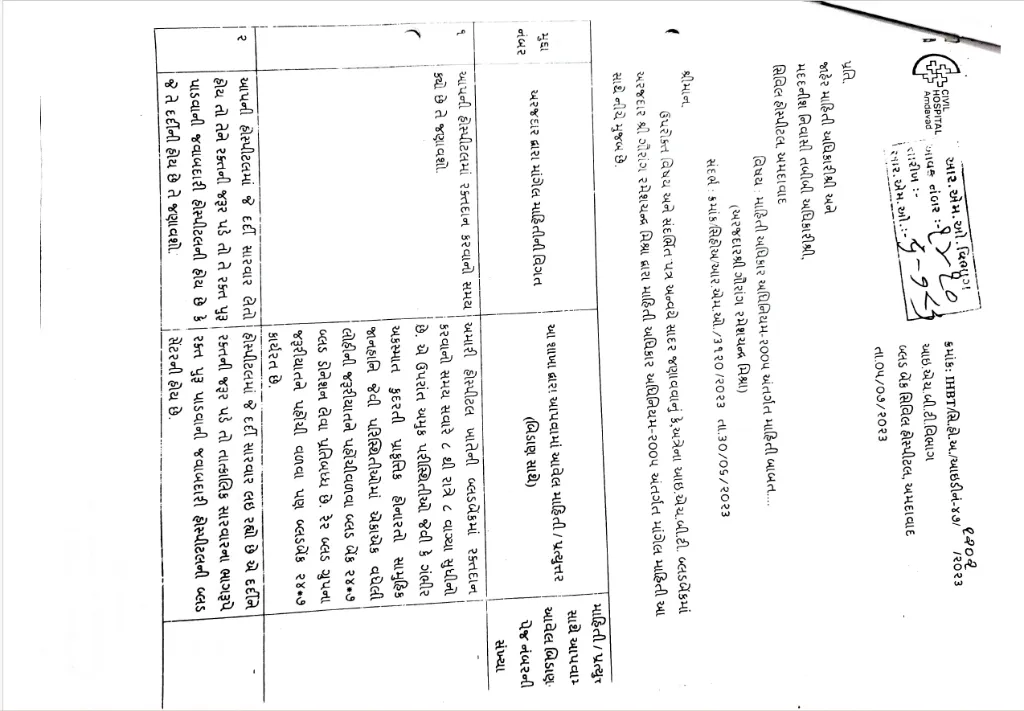
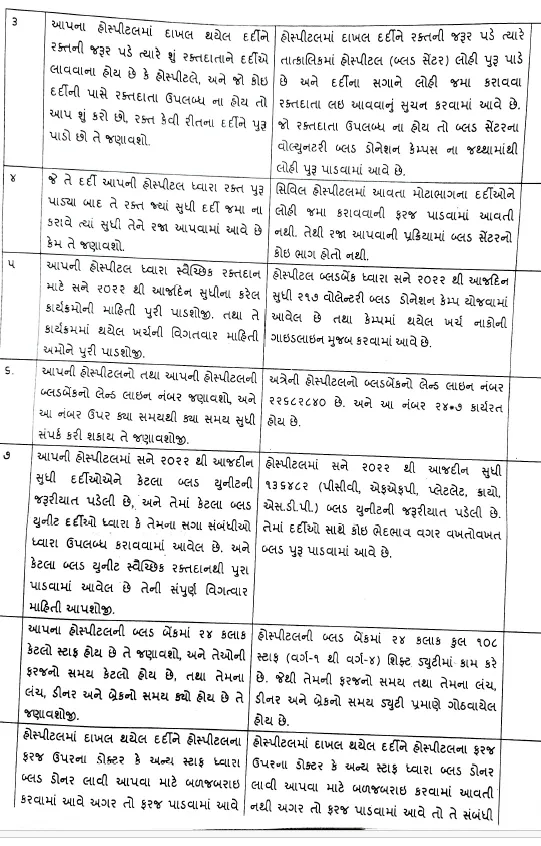
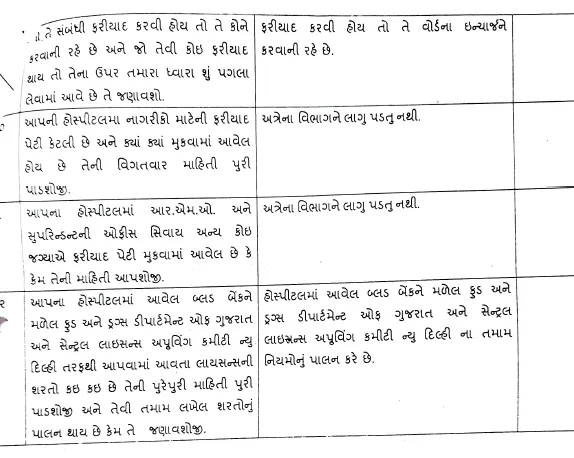
Document Authenticity: These are official documents received from Civil Hospital Ahmedabad under the Right to Information Act, 2005. The information has been carefully translated from Gujarati to English and presented in an accessible format while maintaining complete accuracy and authenticity. The original documents serve as the authoritative source for all information presented in this article.
Share This Valuable Information
Help spread awareness about blood donation facilities and policies at Civil Hospital Ahmedabad. Share this comprehensive information with your network to help more people understand the importance of blood donation and the professional management of blood banking services.
Related Resources and Information
Register as a Donor
Join our network of life-saving blood donors and make a difference in your community
Emergency Blood Requests
Find blood donors quickly for urgent medical requirements
Blood Donation Guide
Learn everything you need to know about blood donation
Frequently Asked Questions
Find answers to common questions about blood donation