By Lifesavers United | lifesaversunited.org
Let me ask you something. When was the last time you thought about what's actually inside your blood? Not in a morbid way. just genuinely thought about it. Most of us know blood is red, we know we need it to survive, and we know that hospitals always seem to need more of it. But blood is not one single thing. It's a mixture of several components, each doing a completely different job, and one of those components. plasma is quietly responsible for keeping millions of people alive in India right now.
And most people have never even heard of donating it.
That's exactly why we're writing this. At Lifesavers United, we talk to donors, patients, and healthcare workers every week. And the number of times we hear "I didn't even know plasma donation was a thing" is honestly heartbreakingbecause people who would have donated if they'd only known simply never got the information. So here it is. Everything you need to know, no jargon, no fluff, just the truth about plasma donation in India.
🔬 First Things First - What Exactly Is Plasma?
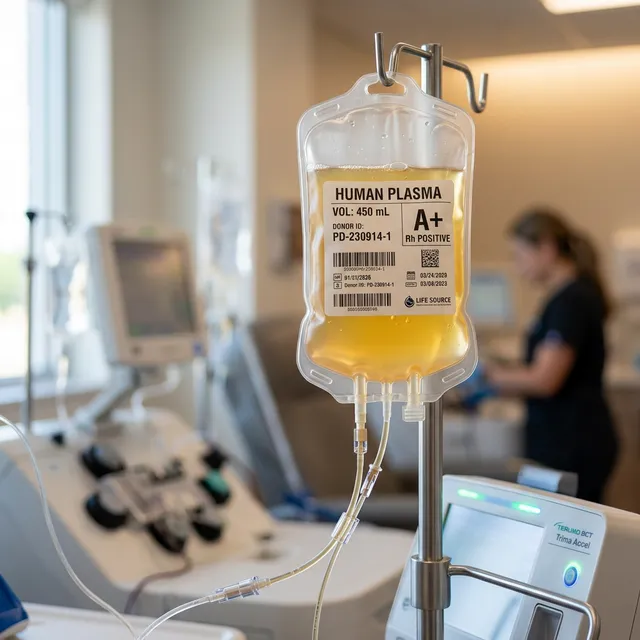
Your blood is made up of four main components: red blood cells, white blood cells, platelets, and plasma. Plasma is the liquid that holds everything else together. It's a pale, yellowish fluid - almost straw-coloured - and it makes up roughly 55% of your total blood volume. About 90% of plasma is water, but that remaining 10% is where things get interesting. Packed inside that 10% are proteins, antibodies, clotting factors, hormones, and enzymes that your body absolutely cannot function without.
Think of plasma as your body's internal courier and security system combined into one. It carries nutrients, hormones, and waste products around the body. It contains clotting factors that stop you from bleeding out when you get a cut. And it carries antibodies - your immune system's weapons - that fight off infections and diseases.
Here's the problem. Some people's bodies cannot make enough of these proteins or clotting factors on their own. Some patients battling cancer have immune systems that have essentially collapsed. Some people are born with conditions that mean their body produces almost no antibodies at all. These patients cannot get what they need from a pill or a synthetic drug - they need plasma, directly from another human being.
And that is why plasma donation matters.
🇮🇳 The Reality in India - A Gap We Cannot Keep Ignoring
India is the second most populated country in the world. We have 1.4 billion people. And yet, we are chronically short on plasma.
Let's put some numbers to this so the scale of the problem becomes real.
India requires approximately 14.6 million units of blood every year, according to the National Blood Transfusion Council. We collect somewhere between 11 and 12 million units. That's already a shortfall of 2 to 3 million units of whole blood annually. When you specifically look at plasma and plasma-derived products - immunoglobulins, albumin, clotting factor concentrates - the picture becomes even more alarming.
India imports a massive portion of its plasma-derived medicines from countries like the United States. We are dependent on foreign supply chains for medications that Indian patients need every single day. This import dependency drives up prices dramatically. Many families spend lakhs of rupees every year on imported plasma-derived treatments, when in theory, those same treatments could be manufactured right here - if only we had enough domestic plasma to work with.
Licensed plasma collection centres
across all of
India
Plasma collection centres in the USA -
a
country 4× smaller than India
Read that again. A country four times smaller than us has ten times more plasma centers. That is not a small gap - that is a crisis.
India's plasma fractionation industry - the industry that converts raw donated plasma into life-saving medicines - is trying to grow. Companies are investing, technology is improving, and there is genuine intent to reduce import dependence. But they keep running into the same wall: there simply isn't enough donated plasma to work with. The raw material is missing. And that raw material can only come from one place - ordinary people like you who are willing to sit in a chair for an hour.
🔄 How Is Plasma Donation Different From Donating Blood?
This is the question we get most often, and it's the right one to ask.
When you donate whole blood, the process is relatively quick - maybe 10 to 15 minutes once you're settled in. Your body then spends the next few weeks regenerating the red blood cells you've given. This is why whole blood donation is generally limited to once every three months in India.
Plasma donation works differently. It uses a process called apheresis. A machine draws your blood out through a needle in your arm, separates the plasma from your red blood cells and platelets, collects the plasma, and then returns everything else back into your body. Your red blood cells come back to you. Because of this, your body recovers the plasma much more quickly than it recovers after whole blood donation - plasma replenishes itself within 24 to 48 hours.
🩸 Whole Blood Donation
- → 10–15 minutes procedure time
- → Red blood cells not returned
- → Body takes weeks to regenerate RBCs
- → Can donate once every 3 months
💛 Plasma Donation (Apheresis)
- → 45–90 minutes procedure time
- → RBCs & platelets returned to your body
- → Plasma replenishes in 24–48 hours
- → Can donate more frequently
The trade-off is time. The apheresis process takes longer - anywhere from 45 minutes to about an hour and a half depending on the center and your individual blood volume. So while whole blood donation is quick, plasma donation requires a more significant time commitment.
In terms of how often you can donate, different countries have different guidelines. In the US, the rules allow donation up to twice a week. India's guidelines are more conservative - most centers allow plasma donation once every two weeks or so, which is still significantly more frequent than whole blood.
The needles, tubing, and collection equipment used in apheresis are entirely sterile and single-use. There's no risk of any cross-contamination. Once your session is done, everything that was used for you is discarded.
✅ Who Can Donate Plasma in India?
The eligibility criteria are fairly standard across most licensed centers in India, though individual centers may have slight variations. Here's the general framework:
Years of age
Minimum weight
No fever, infection, or flu
Haemoglobin within range
There's a waiting period of six months if you've gotten a tattoo or piercing recently. If you've had major surgery recently, you'll need to wait for a specified recovery period. If you're on certain medications, the medical staff will review whether those medications affect your eligibility.
Who cannot donate:
- People with HIV, active Hepatitis B or C, or active tuberculosis
- People with certain autoimmune conditions
- Pregnant women, or those who have given birth within the last six months
One group worth mentioning specifically: people who have recovered from COVID-19. During the pandemic, convalescent plasma - plasma from recovered patients containing COVID antibodies - became one of the most talked-about treatments in Indian medical circles. Thousands of people donated convalescent plasma during that period, many of them for the very first time, and it showed that when people understand the need and the process, they are willing to step up. That willingness is exactly what we need to see continue beyond any single crisis.
🏥 What Happens When You Actually Go to Donate?
Walking into a plasma center for the first time can feel intimidating. It's clinical, it's unfamiliar, and there are machines involved. So let's walk through the whole thing so you know exactly what to expect.
-
1.
Register & Fill a Health Form
You arrive and register. You'll need a government-issued photo ID - Aadhaar card, voter ID, PAN card, or passport. You fill out a questionnaire about your health history, medications, recent travel, lifestyle factors, and any illnesses you've had recently. Be honest on this form. The questions exist to protect you and the patient who will eventually receive your plasma.
-
2.
Health Screening
A medical professional will check your blood pressure, pulse, temperature, and hemoglobin. They'll review your form and may ask a few follow-up questions. This usually takes 15 to 20 minutes.
-
3.
The Apheresis Session
If you're cleared - and the vast majority of people are - you move to the donation area. A nurse or phlebotomist will clean the inside of your elbow and insert a needle into your vein. The apheresis machine starts running. Blood flows out, the centrifuge spins and separates the components, the plasma gets collected, and the rest goes back in. During this time, you can sit back and relax. Read something, watch TV if the center has screens, scroll through your phone. You might feel slightly cold as the returned blood is a little cooler than body temperature - a warm blanket can help.
-
4.
Rest, Snack & Go
After the collection is complete, the needle comes out, you'll get a bandage on your arm, and you'll be taken to a rest area. Juice and a snack come next. The staff will keep an eye on you for 15 to 20 minutes before you're free to go. Most people walk out feeling completely normal.
💡 A few tips: Drink extra water before and after. Eat a proper meal before you go. Don't do it on an empty stomach or after a night of poor sleep. These small things make a real difference to how you feel during and after the process.
✅ Is It Safe? Let's Be Completely Honest About This
We believe in telling people the truth, even when it's complicated. So here's the full picture on safety.
Plasma donation at a licensed, regulated center is safe. Full stop. The equipment is sterile and single-use every single time. There is zero possibility of contracting a bloodborne illness through the donation process itself because nothing reusable ever touches your blood. The medical staff are trained, the procedures are standardized, and the machines are regularly maintained and monitored.
Common Side Effects (Mild & Temporary)
- Bruising or soreness at the needle site - normal and fades within days.
- Lightheadedness or fatigue immediately afterward, especially if you came in without eating or drinking enough.
- Citrate reaction - tingling in the lips, fingers, or around the mouth during the procedure. The anticoagulant used during apheresis temporarily binds to calcium in your blood, causing this sensation. It sounds alarming, but it's almost always mild and goes away quickly. The staff can slow down the machine if it becomes uncomfortable.
Serious Complications (Genuinely Rare)
In the rare event that something does go wrong - fainting, a significant haematoma, or a more severe reaction - the staff are trained to handle it.
One honest note about long-term, very frequent donation: Research from countries where commercial plasma donation is allowed at very high frequencies - two times a week, year after year - has raised some questions about impacts on immunoglobulin levels over time. India's guidelines are considerably more conservative, so this is less of a concern here. But if you plan to be a regular donor, have an open conversation with the medical team at your center about your individual health.
The bottom line: the risks of plasma donation are real but small, and they need to be weighed against something very concrete - the fact that without your plasma, a patient with haemophilia might bleed internally, or a child with no immune system might die from an infection that most of us would shake off in a week.
🧡 The People Who Need Your Plasma Right Now
Statistics are important, but let's talk about the actual human beings sitting in hospitals across India today who need plasma-derived treatments to survive.
🩸 Haemophilia Patients
India has one of the largest populations of haemophilia patients in the world. Conservative estimates put the number at around 1.5 to 2 lakh patients (150,000–200,000 people) - though many more cases are believed to go undiagnosed, particularly in rural areas. Haemophilia is a genetic condition where the blood cannot clot properly because a specific clotting factor is absent or deficient. Without clotting factor concentrates - manufactured from donated plasma - even a minor internal bleed can become life-threatening. A twisted ankle. A fall. Surgery. Things the rest of us barely think about.
🛡️ Primary Immunodeficiency (PID) Patients
These are people - including many children - who are born with immune systems that either don't work or work very poorly. They cannot fight off infections on their own. They need regular infusions of immunoglobulins - antibodies extracted and concentrated from donated plasma. These infusions typically happen every three to four weeks, for life. Without them, a simple respiratory infection can kill.
🔥 Severe Burn Patients
Severe burns destroy the skin - the body's primary barrier against fluid loss and infection. These patients often need albumin, a plasma-derived protein that helps maintain fluid balance, as part of their critical care.
🏥 Surgical, Sepsis & Cancer Patients
Patients undergoing major liver surgery or transplants, people with severe sepsis, those receiving certain cancer treatments - the list of people who depend on plasma-derived products is longer than most people realise.
Every unit of plasma that is donated here in India has the potential to help manufacture medicine that will reach one or more of these patients. That's not abstract. That's real.
🤔 So Why Aren't More People Donating?
This is the question that keeps us up at night at Lifesavers United. The need is clear. The process is safe. The outcome is life-saving. So why is India still so far behind where it needs to be?
Walk up to ten random people in any Indian city and ask them what plasma donation is. You'll be lucky if three can give you a reasonably accurate answer. Unlike whole blood donation, which has been part of public health campaigns for decades, plasma donation has received almost no sustained public attention. It's simply not on most people's radar.
An hour to an hour and a half is a real commitment. Between long working hours, commutes, family responsibilities, and everything else that fills up an Indian adult's day, finding that time is not trivial. This doesn't make people selfish - it makes them human. Plasma centers need to work harder to make the experience as convenient and time-efficient as possible.
The idea of a machine separating your blood and putting some of it back sounds, frankly, a little terrifying if you've never been exposed to it before. Many people believe plasma donation will leave them permanently weakened, or that their body won't recover, or that it's riskier than regular blood donation. None of this is true, but myths don't disappear just because they're wrong.
With only 80 to 90 centres spread across a country the size of India - most concentrated in large metros - the geographic reality is that the majority of India's population does not have convenient access to a plasma donation centre. A person in Patna, Bhopal, Rajkot, or Coimbatore may want to donate and simply have nowhere to go.
This sounds simple, but it's true. Research on blood and plasma donation consistently shows that one of the strongest predictors of whether someone donates is whether a friend, family member, or trusted institution ever made the ask. Most people who are eligible to donate have never been personally invited to do so.
🇮🇳 What India Needs to Change - And What You Can Do Right Now
Closing India's plasma gap is not a small task, but it's absolutely achievable. It requires changes at multiple levels.
At the policy level, the government needs to invest seriously in expanding plasma collection infrastructure beyond the major metros. There also needs to be sustained, well-funded public awareness around plasma donation specifically - not just blood donation in general. Organizations like the National Blood Transfusion Council and state-level blood transfusion councils need the resources and the mandate to run campaigns that actually reach people.
At the industry level, plasma fractionation companies need to work more closely with collection centers and NGOs to create reliable, efficient pipelines from donor to manufacturer to patient.
At the community level - and this is where you come in - word of mouth is everything. If you've donated plasma, tell people about it. If you haven't, look into it. Share this blog. Have the conversation at your workplace, your housing society, your college, your family WhatsApp group. The information gap is one of the most solvable problems in this entire space, and every one of us can contribute to solving it.
If you want to find a licensed plasma donation center near you, the Indian Red Cross Society and many large government and private hospital blood banks are good places to start. Call ahead to confirm their apheresis services, bring your ID, eat and drink well beforehand, and go with the knowledge that what you're doing is genuinely meaningful.
❤️ A Final Word From Us at Lifesavers United
We started Lifesavers United because we believe that one of the most powerful things an ordinary person can do is give a part of themselves - literally - so that someone else gets to keep living. Blood donation has always been at the heart of that mission. Plasma donation is the next frontier.
India does not have a shortage of generous people. We have seen that clearly, again and again - in blood drives, in disaster relief, in the thousands who lined up to donate convalescent plasma during the worst days of the COVID pandemic. The generosity is there. What's missing is the information and the infrastructure to channel it.
This blog is our small contribution to filling that gap. If it convinced even one person who was on the fence to finally walk into a plasma center, it was worth writing. And if you're that person, we would genuinely love to hear from you.
Donate. Share. Talk about it. The life you help save might be someone's child, someone's parent, someone's best friend.
It might, one day, be someone you love.
Lifesavers United -
lifesaversunited.org
Connecting donors, patients, and communities across India.
Ready to make a difference?
Register as a donor today whole blood or plasma and help save lives across India.