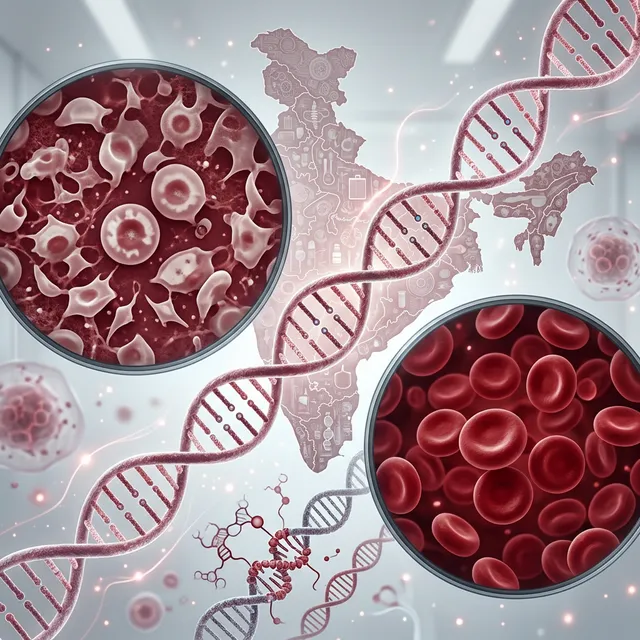
📢 Introduction: The Silent Epidemic Nobody Talks About Enough
Every year, approximately 10,000 to 15,000 children are born in India with Thalassemia Major a severe, lifelong blood disorder that requires a blood transfusion every 2 to 4 weeks, for life. Every single month. Every single year. Until either a cure is found or the child does not survive.
India has the largest thalassemia-affected population in the world. Over 42 million Indians carry the thalassemia gene silently, without any symptoms, completely unaware. Most of them will live normal lives. But when two carriers marry each other which happens every day across India there is a 25% chance with every pregnancy that their child will be born with Thalassemia Major. A child sentenced, from birth, to a life of hospitals, needles, iron overload, and uncertainty.
Yet thalassemia is almost entirely preventable. Not with expensive technology or rare medicines but with a simple blood test before marriage or pregnancy, and an informed decision.
This is the full story of thalassemia in India the science, the suffering, the system, and the solution.
🧬 PART 1: WHAT IS THALASSEMIA?
The Biology Explained Simply
Your red blood cells carry a protein called haemoglobin. Haemoglobin is the molecule that picks up oxygen in your lungs and delivers it to every cell in your body. Without functioning haemoglobin, your cells starve of oxygen and you cannot survive.
Haemoglobin is made of four protein chains two alpha chains and two beta chains wrapped around an iron-containing molecule called haem. These chains are produced by specific genes. In a healthy person, alpha and beta chains are produced in perfect balance, combining seamlessly to form functional haemoglobin.
Thalassemia is a genetic disorder in which mutations in the haemoglobin genes cause one or both types of chains to be produced in reduced amounts or not at all. When the chains are imbalanced, red blood cells become fragile, abnormally shaped, and short-lived. They are destroyed much faster than the body can replace them leading to chronic anaemia.
The bone marrow works desperately to compensate producing red blood cells at an accelerated rate. It expands into bones that are not meant to hold it facial bones, skull, spine causing the characteristic bone deformities seen in untreated thalassemia. The spleen and liver enlarge dramatically as they try to clear the destroyed red cells and compensate for the failing bone marrow.
Without regular blood transfusions, a child with Thalassemia Major cannot survive childhood.
Alpha Thalassemia vs Beta Thalassemia
There are two main types of thalassemia, named for which chain is affected.
Alpha Thalassemia occurs when one or more of the four alpha globin genes are deleted or mutated. Humans have four alpha genes two on each chromosome 16.
- One gene deleted: Silent carrier. No symptoms. Normal life. Person is unaware.
- Two genes deleted: Alpha thalassemia trait. Mild anaemia. Often mistaken for iron deficiency anaemia. Person may feel slightly tired but functions normally.
- Three genes deleted: Haemoglobin H disease. Moderate to severe anaemia. Requires medical management. Spleen may enlarge.
- Four genes deleted: Haemoglobin Bart's hydrops fetalis. The fetus cannot survive. This results in stillbirth or death within hours of birth. The mother also faces severe complications.
Beta Thalassemia occurs when one or both beta globin genes one on each chromosome 11 are mutated. Unlike alpha thalassemia, beta thalassemia involves mutations (not deletions), and over 200 different mutations have been identified worldwide. India alone has over 30 known beta thalassemia mutations, with certain mutations being specific to particular communities and regions.
- One beta gene mutated: Beta Thalassemia Minor (also called Beta Thalassemia Trait). Carrier state. Mild or no anaemia. Person is healthy but can pass the gene to children. This is the most important category in India 42 million Indians are in this group.
- Two beta genes mutated (one mild, one severe): Beta Thalassemia Intermedia. Moderate anaemia. May or may not need regular transfusions. Can survive without transfusions but quality of life is significantly affected.
- Two beta genes mutated (both severe): Beta Thalassemia Major (also called Cooley's Anaemia). Severe, life-threatening anaemia from infancy. Requires regular blood transfusions every 2 to 4 weeks for life. Without treatment, death occurs in early childhood.
Beta Thalassemia Major is the type that defines the Indian thalassemia crisis.
When Does It Appear?
A baby with Thalassemia Major appears normal at birth. This is because in the womb and for the first few months of life, the body uses fetal haemoglobin (HbF) which does not require beta chains. As fetal haemoglobin naturally switches to adult haemoglobin (HbA) between 3 and 6 months of age, the inability to produce beta chains becomes apparent.
The child begins to look pale. Feeding becomes poor. Growth slows. The belly swells as the liver and spleen enlarge. By 6 to 18 months of age, the child is severely anaemic and if untreated, will not survive beyond the age of 5.
This delayed appearance is one reason thalassemia is sometimes diagnosed late especially in rural areas where the initial pallor and poor growth may be attributed to malnutrition or ordinary childhood illness.
📍 PART 2: THALASSEMIA IN INDIA THE SCALE OF THE CRISIS
The Numbers
India carries the heaviest thalassemia burden of any country in the world. The scale is staggering:
- 42 million Indians are carriers of the thalassemia gene (Beta Thalassemia Trait)
- 1,00,000 to 1,50,000 children are currently living with Thalassemia Major in India
- 10,000 to 15,000 new Thalassemia Major babies are born every year in India
- India accounts for approximately 25% of the global thalassemia burden
- Every year, India adds more new thalassemia patients than any other country
These numbers mean that every single day in India, approximately 27 to 40 children are born who will need a blood transfusion every 2 to 4 weeks for the rest of their lives or until they receive a bone marrow transplant.
The Geographic Distribution
Thalassemia is not uniformly distributed across India. Certain states, communities, and regions carry disproportionately high carrier rates.
High-burden states:
- Gujarat: Carrier rate among certain communities can reach 15 to 18%. Communities like Lohana, Kutchi Bhatia, Patel (Patidar), and several others have historically high carrier frequencies. Gujarat has one of the most active thalassemia management and prevention programmes in India.
- Punjab and Sindhi communities: Carrier rates of 5 to 8%. The Sindhi community has a particularly high carrier frequency estimated at up to 10 to 12% in some studies.
- Maharashtra: Significant burden, particularly in Mumbai, Pune, and Nagpur. Communities including Koli, Agri, and several others have elevated carrier rates.
- West Bengal: High burden, with carrier rates of 7 to 10% in some communities including Bengali Brahmins and tribal populations.
- Rajasthan, Uttar Pradesh, Delhi: Significant burden due to large populations, though carrier rates are lower per capita.
- South India: Lower carrier rates overall compared to the north and west, but the large population means absolute numbers remain significant. Tamil Nadu, Andhra Pradesh, and Kerala have documented carrier populations.
- Northeastern states: Some tribal communities in Manipur, Assam, and other northeastern states show elevated alpha thalassemia frequencies.
Why certain communities?
The high carrier rates in specific communities are a direct result of endogamy the practice of marrying within one's own community, caste, or sub-caste. When a gene mutation enters a genetically closed population and marriages consistently occur within the group, the mutation frequency rises over generations. This is not a moral judgment it is simple population genetics. But it is a reality that shapes India's thalassemia landscape profoundly.
The Economic Burden
The cost of managing Thalassemia Major in India is financially devastating for most families:
- Regular blood transfusions: Every 2 to 4 weeks, lifelong
- Iron chelation therapy (to remove excess iron from transfused blood): ₹5,000 to ₹15,000 per month depending on the drug
- Laboratory tests, specialist consultations, hospitalisation: Additional ongoing costs
- Total annual cost per patient: ₹1,00,000 to ₹3,00,000 or more per year
For families in rural India, this is catastrophic. Many families exhaust their savings within the first two years. Many parents abandon jobs to care full-time for their child. Many siblings have their education compromised. Families fall into debt cycles from which they never recover.
One study estimated that India spends approximately ₹3,500 crore to ₹4,000 crore per year managing existing thalassemia patients a figure that grows every year as more children are born and survive longer with improving treatment.
Yet the cost of preventing a single case of Thalassemia Major through premarital screening of both partners is less than ₹500.
🏥 PART 3: DIAGNOSIS HOW THALASSEMIA IS IDENTIFIED
Diagnosing the Carrier (Thalassemia Minor / Trait)
Thalassemia carriers have no symptoms or only very mild anaemia. They are diagnosed through:
- Complete Blood Count (CBC): Shows reduced mean corpuscular volume (MCV) and mean corpuscular haemoglobin (MCH) the red blood cells are smaller and paler than normal. This pattern is often mistaken for iron deficiency anaemia and incorrectly treated with iron supplements which are unnecessary and can be mildly harmful in carriers.
- Haemoglobin Electrophoresis / HPLC (High Performance Liquid Chromatography): This is the definitive test. It separates different types of haemoglobin and measures their proportions. Beta thalassemia trait is confirmed by an elevated HbA2 level (typically above 3.5%). This test is the foundation of all thalassemia screening programmes.
The cost of HPLC: approximately ₹300 to ₹800 in most cities. Completely affordable. Widely available in urban centres. Still inaccessible in hundreds of rural districts.
Diagnosing the Child (Thalassemia Major)
A child with Thalassemia Major is diagnosed through:
- Clinical presentation: Severe pallor, enlarged spleen and liver, poor growth, jaundice, bone changes appearing between 6 months and 2 years of age.
- CBC: Severely low haemoglobin (often below 7 g/dL at diagnosis, sometimes as low as 3 to 4 g/dL in neglected cases). Severely abnormal red blood cell morphology target cells, fragmented cells, nucleated red blood cells.
- HPLC / Haemoglobin Electrophoresis: Shows absent or severely reduced HbA, with predominantly HbF remaining the diagnostic signature of Beta Thalassemia Major.
- Genetic testing: Identifies the specific mutations important for family counselling and for bone marrow transplant planning.
Prenatal Diagnosis The Option Before Birth
When both parents are confirmed thalassemia carriers, prenatal diagnosis during pregnancy can determine whether the fetus has inherited Thalassemia Major.
- Chorionic Villus Sampling (CVS): Performed at 10 to 13 weeks of pregnancy. A small sample of placental tissue is taken and the fetal DNA is analysed for thalassemia mutations. This is the earliest option.
- Amniocentesis: Performed at 14 to 18 weeks of pregnancy. Fetal cells from the amniotic fluid are analysed.
Both procedures carry a small risk of miscarriage (approximately 0.5 to 1%). Couples are extensively counselled before and after the procedure. If the fetus is found to have Thalassemia Major, the couple is given complete, honest information and supported in making an informed decision including the option of medical termination of pregnancy under India's MTP Act.
This is a deeply personal and emotionally complex decision. Counselling by a trained genetic counsellor is essential not directive, not prescriptive, but fully informed.
💉 PART 4: TREATMENT LIVING WITH THALASSEMIA MAJOR
Regular Blood Transfusions The Lifeline
The cornerstone of Thalassemia Major treatment is regular blood transfusion. Transfusions maintain haemoglobin at a level that allows the child to grow normally, prevents bone deformities, reduces spleen enlargement, and suppresses the dangerous over-activity of the bone marrow.
Transfusion protocol:
- Target pre-transfusion haemoglobin: 9 to 10.5 g/dL
- Frequency: Every 2 to 5 weeks, individualised to each patient
- Volume: 10 to 15 ml per kg of body weight per transfusion
- Blood type used: Leuco-reduced, phenotypically matched packed red blood cells this means the blood must be matched not just for ABO and Rh(D) but for additional antigens (typically C, c, E, e, and Kell) to reduce the risk of alloimmunisation
A child weighing 20 kg, for example, receives approximately 200 to 300 ml per transfusion. Over a lifetime, a thalassemia patient may receive hundreds of transfusions. Without extended antigen matching which remains unavailable in most of India many patients develop multiple red cell antibodies over time, making finding compatible blood increasingly difficult.
Each transfusion introduces approximately 200 to 250 mg of iron into the body. The body has no natural mechanism to excrete this excess iron which begins depositing in vital organs.
Iron Overload The Hidden Killer
Every unit of blood transfused carries iron. Over months and years of regular transfusions, iron accumulates in the heart, liver, pancreas, and endocrine glands. This iron overload if untreated is the leading cause of death in thalassemia patients. It causes:
- Cardiac complications: Iron deposits in the heart muscle cause arrhythmias, heart failure, and sudden cardiac death the most common cause of death in thalassemia patients who do not receive adequate chelation.
- Liver fibrosis and cirrhosis: Iron damages liver cells progressively.
- Diabetes mellitus: Iron deposits in the pancreas destroy insulin-producing cells.
- Hypogonadism: Iron in the pituitary gland disrupts hormonal signalling causing delayed puberty, infertility, and growth failure.
- Hypothyroidism and hypoparathyroidism: Endocrine glands fail under iron burden.
Monitoring iron overload: Serum ferritin (should be kept below 1,000 ng/mL) and MRI T2* (the gold standard for measuring iron in the heart and liver available in large centres but expensive and inaccessible in rural India).
Iron Chelation Therapy Removing the Excess Iron
To prevent iron overload, thalassemia patients must receive iron chelation therapy medications that bind to excess iron and help excrete it through urine or stool. Three chelating agents are available in India:
-
1. Desferrioxamine (DFO / Desferal)
The oldest and most studied chelator. Given by slow subcutaneous infusion over 8 to 12 hours, 5 to 7 nights per week using a small pump. Extremely effective but the mode of administration (a needle under the skin every night) is difficult for children to tolerate and requires strict discipline. Cost is moderate. Available through government programmes in some states.
-
2. Deferiprone (DFP / Kelfer)
An oral chelator tablet form, taken 3 times daily. Particularly effective at removing iron from the heart a critical advantage. Side effects include joint pain and, rarely, a dangerous drop in white blood cells (agranulocytosis) requiring regular blood count monitoring. Often used in combination with Desferrioxamine for high cardiac iron burden.
-
3. Deferasirox (DFX / Asunra, Jadenu)
An oral chelator taken once daily dissolved in water or as a tablet. The most convenient chelation option. Effective for liver iron. Side effects include kidney and liver toxicity, requiring regular monitoring. Cost has historically been the highest of the three though generic versions have significantly reduced the price in India.
The goal of chelation is to keep serum ferritin consistently below 1,000 ng/mL and to maintain cardiac and liver iron at safe levels. Patients who are well-chelated who never miss their chelation live significantly longer, healthier lives.
Tragically, many thalassemia patients in India are either under-chelated (due to cost and access) or not chelated at all dying of cardiac iron overload in their teens and twenties.
Splenectomy When the Spleen Becomes the Problem
In many thalassemia patients, the spleen enlarges significantly as it attempts to compensate for the failing bone marrow and to clear destroyed red blood cells. An enlarged spleen begins to destroy transfused blood faster dramatically increasing transfusion requirements and making management more difficult. This is called hypersplenism.
When the spleen becomes a clinical problem significantly increasing transfusion needs or causing pain and discomfort splenectomy (surgical removal of the spleen) may be recommended. After splenectomy, transfusion requirements often decrease and blood counts become more manageable.
However, the spleen is a critical immune organ. After splenectomy, patients have permanently reduced immunity against encapsulated bacteria like Streptococcus pneumoniae and Haemophilus influenzae. They must receive specific vaccinations before splenectomy and take lifelong prophylactic penicillin. Overwhelming post-splenectomy infection (OPSI) a rapid, catastrophic infection is a rare but potentially fatal risk.
Bone Marrow Transplant The Only Cure
A bone marrow transplant (BMT), also called a haematopoietic stem cell transplant (HSCT), is the only established cure for Thalassemia Major. In BMT, the patient's own diseased bone marrow which cannot produce healthy haemoglobin is destroyed using high-dose chemotherapy (conditioning). It is then replaced with healthy stem cells from a compatible donor. The new stem cells engraft in the bone marrow and begin producing normal, healthy red blood cells for life.
After a successful BMT, the patient no longer needs blood transfusions. They are cured.
Who can donate for BMT?
The best outcome is achieved with a matched sibling donor a brother or sister whose HLA (Human Leukocyte Antigen) tissue type matches the patient's. Approximately 25 to 30% of thalassemia patients have a matched sibling donor available. For others, options include Matched Unrelated Donors (MUD) from registries like DATRI, haploidentical transplants using parents, or cord blood transplants.
In experienced Indian centres like AIIMS New Delhi, Tata Medical Center Kolkata, and CMC Vellore, disease-free survival rates for young, healthy children with matched sibling donors are 85 to 92%.
The challenge: Cost. BMT in India costs approximately ₹15 to ₹30 lakhs. While some government schemes (Rashtriya Arogya Nidhi) provide funding, demand overwhelms availability by a wide margin.
Gene Therapy The Horizon of Hope
Gene therapy (like Zynteglo or Casgevy) corrects the defective gene in the patient's own cells. While approved in Western markets and delivering remarkable results, the current cost ($2 to $3 million) is astronomical.
Indian research institutions (CSIR, DBT) are working on developing indigenous, affordable gene therapy solutions. This is a national priority.
🛡️ PART 5: PREVENTION HOW INDIA CAN STOP THALASSEMIA
Premarital and Preconception Screening
This is the most powerful tool available. If both prospective partners are tested for thalassemia trait before marriage, they can make informed reproductive choices. If only one partner is a carrier, all children will be either carriers or normal no child will have Thalassemia Major. The disease can only be passed on when both parents are carriers.
The test is simple, affordable, and available:
- HPLC or haemoglobin electrophoresis
- Cost: ₹300 to ₹800
- Result time: 24 to 48 hours
- Available at: All major government hospitals, medical college blood banks, and most private diagnostic labs in cities
The challenge is awareness, not technology. The vast majority of carrier couples who produce Thalassemia Major children had no idea they were carriers. They married, had children, and discovered their child's diagnosis only when the baby became severely ill.
India's Prevention Programmes What Exists and What Is Missing
What exists:
Gujarat has India's most advanced state-level thalassemia prevention programme. The Sickle Cell and Thalassemia Control Programme in Gujarat has been conducting community-level carrier screening for several years, particularly targeting high-risk communities. Gujarat also mandates HPLC testing for all pregnant women in government hospitals.
Maharashtra, West Bengal, Delhi, and several other states have NGO-led and government-supported screening initiatives though coverage remains limited.
The National Health Mission (NHM) has included thalassemia screening in its guidelines, and some states offer free HPLC testing at government hospitals.
What is missing:
There is no national mandatory premarital thalassemia screening law in India. Unlike Cyprus, Greece, Iran, and several other countries that have dramatically reduced thalassemia rates through mandatory premarital screening programmes, India has no such legislation at the national level.
Iran reduced its thalassemia birth rate by over 90% within a decade of implementing mandatory premarital screening. Cyprus has reduced its rate of new thalassemia births to near zero.
India, with 25 times the affected population of both these countries combined, has no comparable national programme.
The Role of Schools and Colleges
Several organisations and state governments have begun introducing thalassemia screening in schools and colleges targeting young people before they make reproductive decisions. Screening adolescents is considered the most effective public health intervention because it reaches people before marriage and pregnancy, at an age when the information is most actionable.
Programmes in Gujarat, Maharashtra, and West Bengal have screened tens of thousands of school and college students identifying carriers, educating them about their status, and counselling them about their reproductive choices.
This is the direction India must move in systematically, at scale, with government support.
Awareness Among Doctors
A significant but often overlooked problem is that many general practitioners in India particularly in tier-2 and tier-3 cities and rural areas do not recognise the signs of thalassemia trait. A carrier with mildly small red blood cells is routinely diagnosed as iron deficient and started on iron supplementation which does not help and can cause mild iron overload over time.
Every doctor in India should be able to identify the CBC pattern of thalassemia trait and order HPLC. This is not complex it requires awareness, not technology. Medical education in India must ensure this is explicitly taught and tested.
👨👩👧 PART 6: LIVING WITH THALASSEMIA THE HUMAN STORY
The Child's World
A child with Thalassemia Major grows up knowing the inside of a hospital as well as the inside of a classroom. Every 2 to 4 weeks, school is missed for a transfusion. "Hospital days" become a routine part of life the anticipation of the needle, the hours spent in a bed, the post-transfusion energy boost.
Despite this, thalassemia children demonstrate extraordinary resilience. Many lead academically successful lives, excel in arts, and participate in sports (within their physical limits). But the psychological burden of being "different," of the ever-present threat of iron overload, and the uncertainty of the future is significant.
The Family's Journey
For parents, the diagnosis is often a moment of profound guilt and terror. The realisation that they passed on this condition unwittingly is a heavy emotional burden. The focus of the entire family shifts toward the child's transfusion schedule, ferritin levels, and chelation discipline.
In India, this struggle is compounded by the systemic failure to provide widespread screening. It is critical to understand: Thalassemia carriers did nothing wrong. They simply inherited a common gene mutation. The failure lies in the lack of information and the lack of universal screening before marriage.
Families need not just medical support, but emotional and financial support. Thalassemia NGOs in India (like Thalassemics India, The Thalassemia Hope, and others) play a vital role in providing this community support.
The Donor Connection
Every thalassemia patient is kept alive by the kindness of strangers. Every unit of blood transfused into a child is a gift from a voluntary donor. The connection between a thalassemia patient and the donor community is the most profound relationship in clinical medicine yet they rarely meet.
India's blood donation gap directly affects thalassemia patients. When blood banks run low, thalassemia children are the first to feel it. Delayed transfusions cause tiredness, poor growth, and long-term complications.
SDP (Single Donor Platelet) donation and regular voluntary whole blood donation are literal lifelines. If you donate blood today, there is a high probability your unit will be used to keep a child with thalassemia alive for another month.
🌐 PART 7: WHAT INDIA NEEDS A NATIONAL ROADMAP
The path toward a thalassemia-free India is clear, but requires political will and public action:
Universal Carrier Screening
Every adolescent, before leaving school or college, should have access to a free HPLC test. Every couple should be aware of their status before marriage. We need a national awareness campaign on the scale of Pulse Polio.
Universal Access to Treatment
No child in India should die because they cannot afford chelation medicine or cannot find compatible blood. We need free, leuco-reduced, antigen-matched transfusions at every district hospital and free chelation therapy as part of the Essential Medicines List in every state.
Expanding the Bone Marrow Registry
We need millions more Indians to register as stem cell donors. The probability of finding a match for an Indian patient is much higher within the Indian population. Registries like DATRI need massive expansion through government support.
Research and Indigenous Gene Therapy
India must invest in the indigenous development of gene therapy. We cannot wait for multi-million dollar Western therapies to become affordable. We have the scientific talent; we need the funding and the focus.
❤️ CLOSING: A DISEASE WE CAN END IF WE CHOOSE TO
Thalassemia is not a mystery or an inevitable fate. It is a condition of the blood that can be identified with a simple diagnostic test costing less than a pizza.
Ending the birth of children with Thalassemia Major does not require a scientific breakthrough it requires awareness and the choice to act before marriage and during pregnancy.
If you are getting married get tested. If you are a doctor screen your patients before prescribing iron. If you are a donor donate regularly.
India has overcome epidemics like Smallpox and Polio. We have the capacity, the technology, and the people to make Thalassemia Major history. It only requires the collective will of a nation that cares for its children.
Ready to make a difference?
Learn more or register today to save lives!