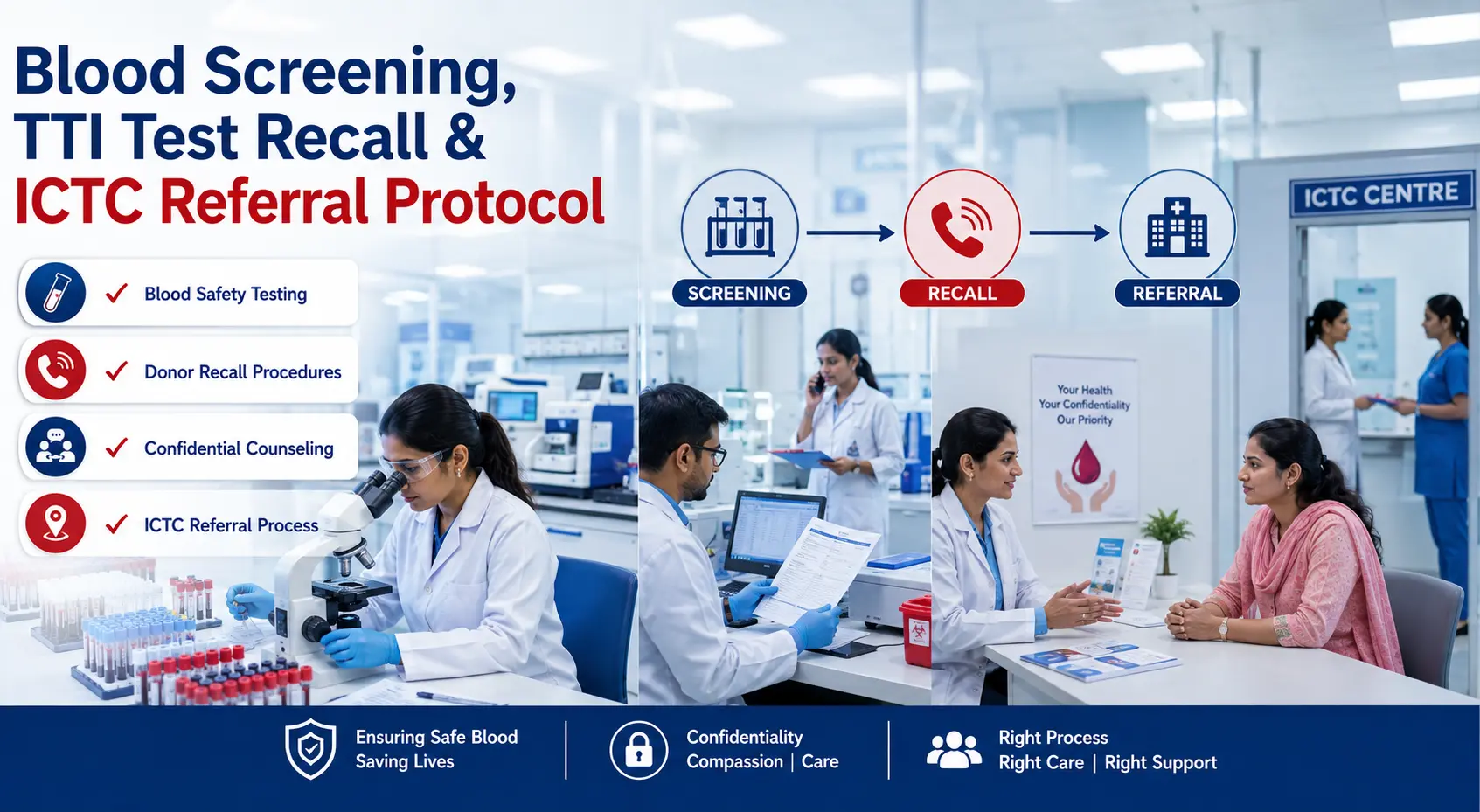
In India, recipient safety is non-negotiable. Every single blood unit collected by a licensed blood center—whether at a permanent hospital blood bank or a voluntary outdoor donation camp—must undergo mandatory screening for five major Transfusion Transmitted Infections (TTIs): HIV-1/2, Hepatitis B (HBV), Hepatitis C (HCV), Syphilis, and Malaria parasites. Under the revised February 2025 DGHS Guidelines, strict protocols govern how screening is conducted, how sero-reactive units are quarantined, and how donors are confidentially recalled and linked to ICTC / ART treatment facilities.
What happens when a voluntary blood donor's sample tests initial sero-reactive for HIV or Hepatitis? Does the blood bank call their employer? Do they send an unsealed letter? How is donor confidentiality protected while ensuring early medical intervention? This guide breaks down the legal, clinical, and ethical frameworks governing blood screening and donor referral in India.
🔬 1. Strategy-I Screening Protocol at Licensed Blood Centers
In diagnostic laboratories, infectious disease testing follows Strategy II or Strategy III (requiring multiple orthogonal confirmatory tests before revealing a diagnosis). However, blood transfusion services operate under Strategy I (Screening Strategy):
How Strategy-I Works:
- High Sensitivity Assays: Blood banks use 4th-generation ELISA, Chemiluminescence Immunoassays (CLIA), or Nucleic Acid Testing (NAT) designed for maximum analytical sensitivity.
- Quarantine & Destruction: If a blood bag tests reactive on a single screening test, it is immediately quarantined and destroyed as biohazardous waste. It is NEVER transfused to a recipient.
- Initial Sero-Reactive Status: A reactive screening test does not mean a definitive clinical diagnosis. It signifies an initial sero-reactive status requiring confirmatory diagnostic testing at a specialized health facility.
📋 2. The 5-Stage Blood Donor Counseling Workflow
Under the 2025 DGHS guidelines, blood donor interaction is structured into five distinct counseling stages:
Educating donors on TTI modes of transmission, window periods, voluntary nature of donation, and potential adverse reactions.
One-on-one private review of the Donor Questionnaire, explaining self-deferral options, and obtaining written consent for TTI testing.
Ensuring donor comfort, reducing anxiety, explaining phlebotomy site care, and thanking the donor.
Non-reactive donors receive appreciation cards. Initial sero-reactive donors are confidentially recalled for in-person post-test counseling.
Issuing formal referral letters to Integrated Counselling & Testing Centres (ICTC), ART centers, or gastroenterology clinics for confirmatory workup.
🔒 3. Strict Confidentiality & In-Person Recall Protocol
One of the most critical directives in the 2025 DGHS guidelines is the prohibition of telephone or digital result disclosure:
Why Phone/SMS Disclosure is Strictly Prohibited:
Disclosing an abnormal TTI screening result over phone call, SMS, or email violates medical privacy, risks exposing the donor's status to family members or employers, and can induce severe acute psychological panic without immediate professional counseling support.
- Recalls are conducted via confidential sealed registered letters inviting the donor for a routine follow-up appointment.
- All post-test discussions occur in a dedicated private counseling room inside the blood center.
🏥 4. Official ICTC / ART Center Referral & 3-Attempt Rule
When a donor attends post-test counseling for HIV reactivity, the Medical Officer executes the standard NBTC Referral Protocol:
| Target Disease Screening | Specialized Referral Facility in India | Follow-Up Action Required |
|---|---|---|
| HIV-1 / HIV-2 Sero-Reactivity | Integrated Counselling & Testing Centre (ICTC) / ART Center | Confirmatory 3-test strategy, CD4 count, free antiretroviral therapy (ART) initiation. |
| Hepatitis B (HBsAg) Reactivity | Gastroenterology / Hepatology Department / STI Clinic | HBV DNA viral load, liver function tests (LFT), family/spouse screening & vaccination. |
| Hepatitis C (Anti-HCV) Reactivity | Gastroenterology / Hepatology Clinic | HCV RNA PCR testing, direct-acting antiviral (DAA) therapy evaluation. |
| Syphilis (VDRL / TPHA) Reactivity | STI Clinic / Dermatologist & Venereologist | TPHA confirmatory testing, Penicillin therapy, partner notification. |
The 3-Attempt Shared Confidentiality Rule:
If a sero-reactive donor does not respond to the initial recall letter, the blood center counselor makes up to 3 separate contact attempts across 3 consecutive weeks. If the donor remains unreached after 3 attempts, the case details are confidentially transferred to the designated ICTC / NACO District Link Worker under shared medical confidentiality to ensure the individual is not lost to follow-up care.
❓ 5. Frequently Asked Questions (FAQs)
Q1: Does an initial reactive screening result mean I definitely have HIV or Hepatitis?
No! Blood bank screening tests use ultra-sensitive assays designed to catch every potential trace, which can occasionally yield biological false-positive results. A formal diagnosis requires confirmatory testing at an ICTC or specialized hospital laboratory.
Q2: Will my blood donation test results be shared with my employer or family?
Never. All blood donation records and test results are strictly confidential under Indian law. Information is shared only with the donor directly during in-person counseling or linked healthcare professionals under shared medical confidentiality.
Q3: Can I donate blood to get myself tested for HIV or Hepatitis?
No! Donating blood as a free diagnostic test is extremely dangerous due to the immunological window period. If you suspect recent exposure, visit your nearest ICTC or diagnostic lab directly rather than donating blood.
Review Complete 2025 Guideline Series
Return to our master guide or explore sub-blogs covering tattoos, chronic illness eligibility, medication charts, and women's health rules.